
Next-Generation RF Solutions for 5G-Advanced (5.5G) & Private Networks
Empowering ultra-reliable, low-latency telecommunications with breakthrough Multi-Physics modeled filters, Massive MIMO support, and high-power thermal management.
The telecommunications landscape is undergoing a monumental paradigm shift. As we transition from standard 5G to the 3GPP Release 18 defined 5G-Advanced (commonly referred to as 5.5G), the demands placed on Radio Frequency (RF) infrastructure are reaching unprecedented levels. The spectrum is becoming profoundly congested, necessitating innovative approaches to signal purity and interference mitigation.
The Era of Massive MIMO & Spectrum Congestion
In the 5.5G era, network architectures rely heavily on Ultra-Large-Scale Antenna Arrays (Massive MIMO). While this technology drastically increases spectral efficiency and network capacity, it introduces severe complexity to the RF front-end. The electromagnetic environment is more crowded than ever before, with adjacent frequency bands packed tightly together to maximize bandwidth utilization.
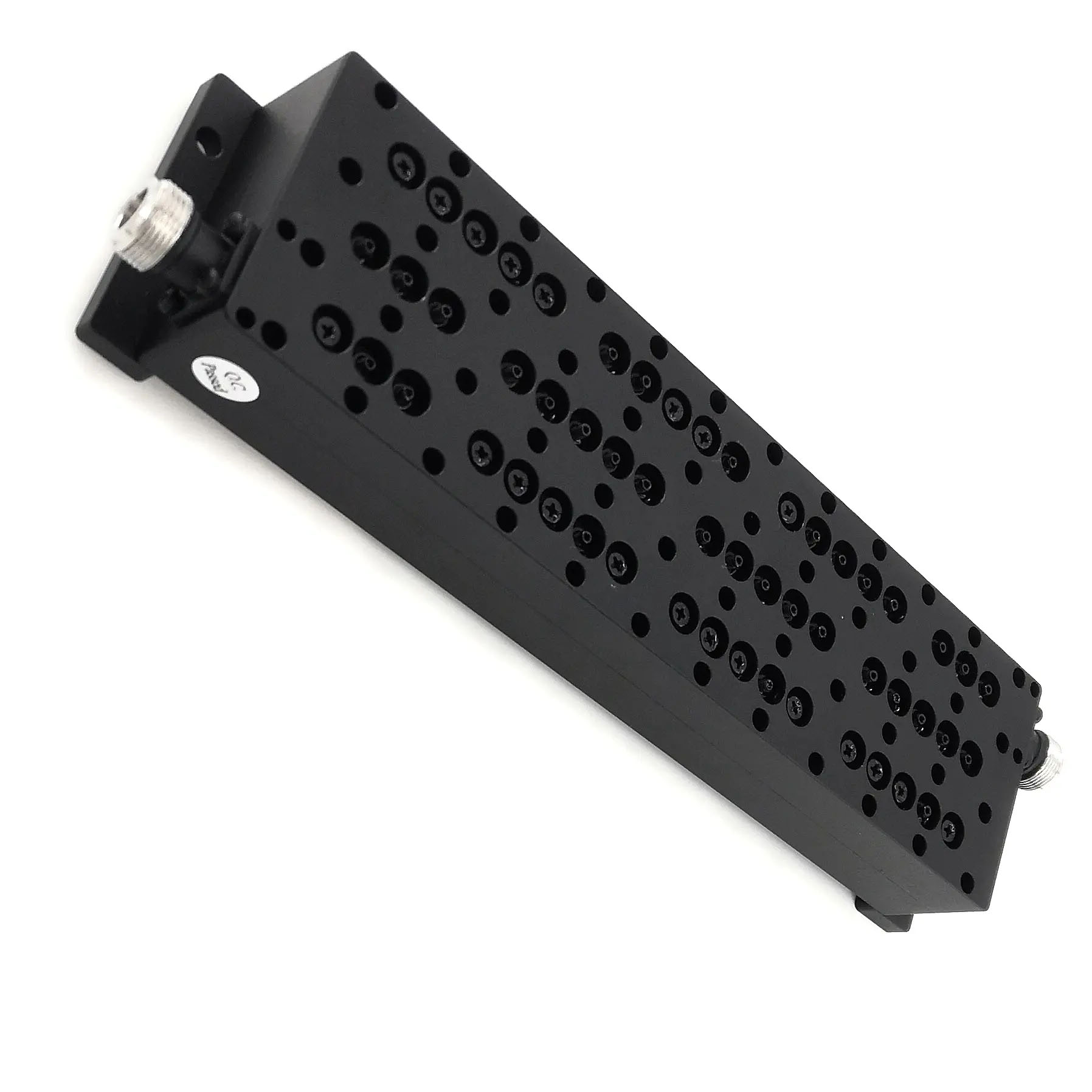
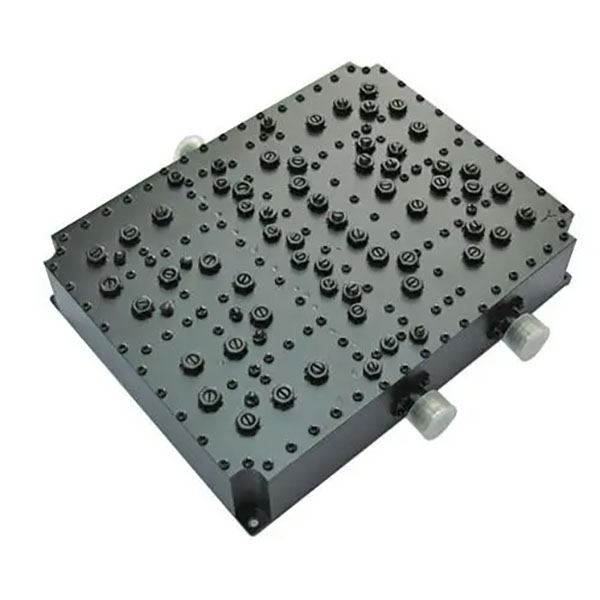
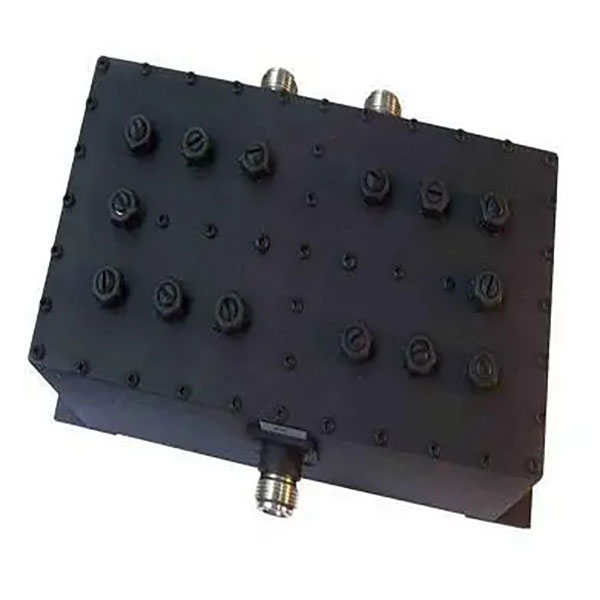
This extreme spectrum density means that traditional RF filters are no longer sufficient. 5.5G base stations require filters with exceptionally steep skirts (high rejection capabilities) to prevent signal bleed. Furthermore, as these Massive MIMO systems push higher transmission powers to achieve gigabit speeds, they generate immense thermal loads. This heat directly impacts the physical dimensions of the filter cavities, leading to a phenomenon known as temperature drift or frequency shift, which degrades network performance and reliability.
Critical Bottlenecks in 5.5G
⚠️ Severe Spectrum Crowding: Tightly packed bands require unprecedented out-of-band rejection.
⚠️ Massive MIMO Complexity: 64T64R and 128T128R configurations demand miniaturized, yet robust components.
⚠️ Extreme Thermal Loads: High-power continuous transmission causes cavity expansion and frequency drift.
The Challenges (Technical Roadblocks)
Deploying 5.5G and industrial private networks presents unique physical and electromagnetic challenges that standard RF components simply cannot survive.
Sub-6GHz Adjacent Channel Interference
The Sub-6GHz frequency band is the foundational workhorse for global 5G and 5.5G deployments, offering the optimal balance between coverage area and data throughput. However, as telecom operators maximize their spectrum licenses, the guard bands between active channels are shrinking drastically.
This proximity results in severe Adjacent Channel Interference (ACI). When a high-power base station transmits, inherent noise and intermodulation products can bleed into neighboring frequencies, completely degrading the Signal-to-Interference-plus-Noise Ratio (SINR). For private networks operating in smart factories, this interference can cause unacceptable packet loss, directly threatening the safety and synchronization of automated machinery.
Heat Dissipation & Frequency Shift
5.5G base stations operate at exceptionally high power levels to maintain wide coverage and deep indoor penetration. This continuous high-power RF energy generates intense thermal output within the passive components, particularly the cavity filters and combiners.
Standard aluminum or traditional alloy cavities suffer from a high Coefficient of Thermal Expansion (CTE). As the temperature rises, the physical dimensions of the resonant cavities expand. In the microwave domain, even a microscopic change in cavity size causes a massive frequency shift (Temperature Drift). If the center frequency drifts, the filter's rejection skirt moves into the passband, cutting off the intended signal and catastrophically dropping network connections.
Our Innovative Solutions
Leader Microwave has engineered a proprietary suite of advanced RF passive components designed specifically to conquer the harsh realities of 5.5G and industrial private networks. Through material science and computational modeling, we deliver uncompromising performance.
Advanced High-Temp Materials
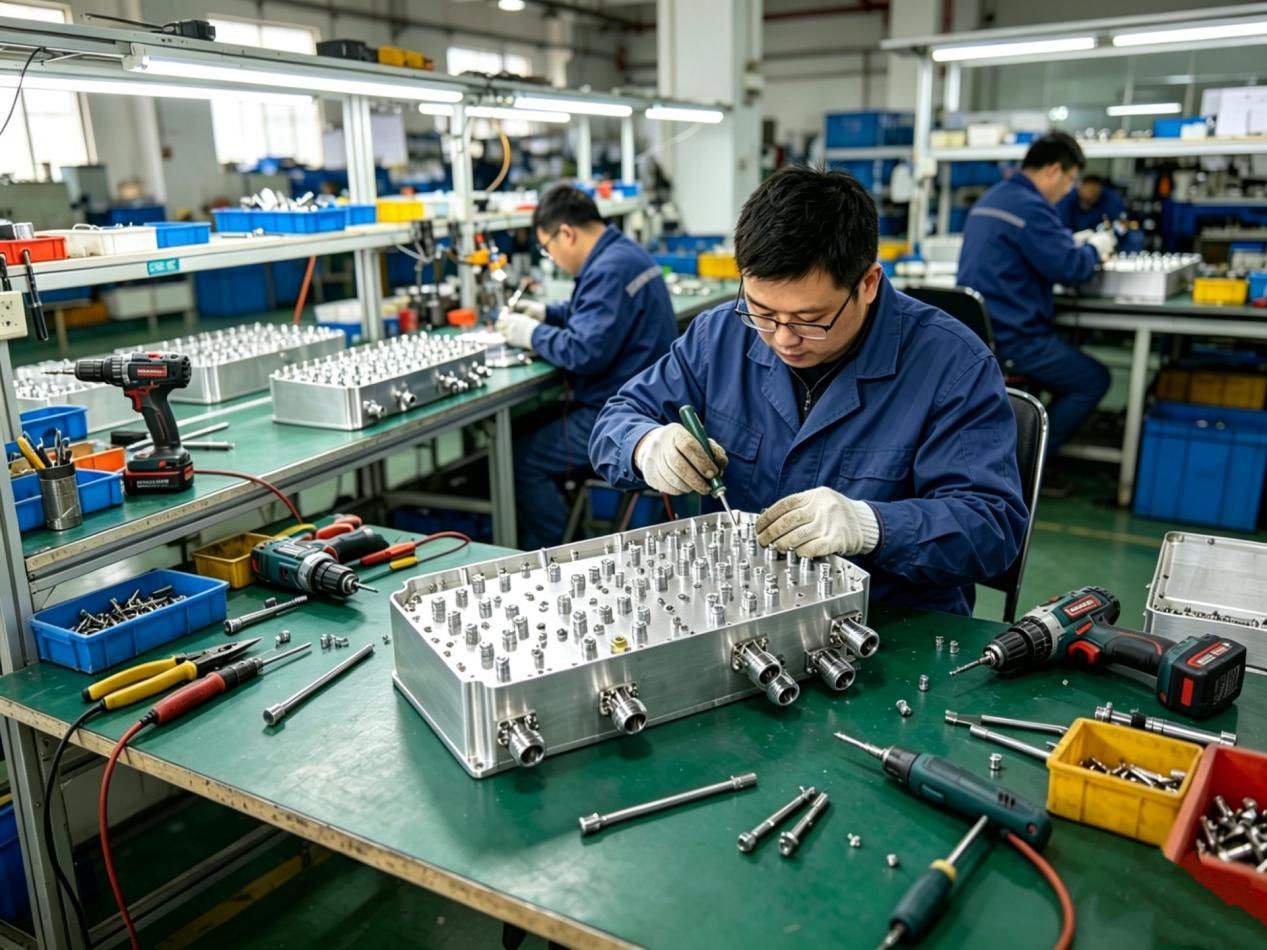
To combat thermal expansion, we have revolutionized our cavity designs by substituting standard metals with highly specialized, temperature-resistant materials. We utilize Invar alloy (FeNi36) resonator rods. Invar possesses a near-zero Coefficient of Thermal Expansion (CTE), ensuring the resonator dimensions remain absolute even under extreme thermal stress.
Coupled with precision-machined brass tuning screws and silver-plated inner conductors, our filters maintain perfect frequency stability, completely eradicating temperature drift in high-power 5.5G base stations.
Multi-Physics Simulation Modeling
Before a single piece of metal is cut, our engineering team utilizes state-of-the-art Multi-Physics Simulation Software (integrating electromagnetic, thermal, and mechanical structural analysis). By simulating high-power multi-carrier environments in a virtual space, we can pinpoint thermal hotspots and electromagnetic coupling issues.
This rigorous modeling allows us to design the optimal cavity geometry and heat-sink structures, ensuring that our components achieve maximum performance, highest Q-factor, and optimal heat dissipation right out of the box.
Ultra-Low PIM Design
Passive Intermodulation (PIM) is the silent killer of network capacity. In 5.5G environments where multiple high-power carriers are transmitted simultaneously, non-linearities in RF components generate ghost signals (PIM) that blind the receiver.
Leader Microwave employs a rigorous Low PIM design philosophy. Through seamless cavity construction, optimized contact pressure points, specialized soldering techniques, and ultra-smooth surface finishes, we guarantee exceptional signal purity. Our Low PIM power dividers and duplexers ensure that base stations maximize their coverage area while drastically reducing the operator's energy consumption costs.
Empowering Industrial Private Networks
Private 5.5G networks are the backbone of the Fourth Industrial Revolution. Environments such as Smart Factories, Automated Ports, and Deep-Shaft Mining require network latency to be pushed down to the millisecond, with reliability hitting 99.9999%.
Our RF filters, combiners, and custom cable assemblies eliminate interference and ensure that mission-critical data—from remote crane operations to robotic assembly lines—is transmitted flawlessly, without delay or disruption caused by RF noise.